Ballasted
Ballasted method for EPDM
The membrane is loosely laid on the roof surface and then covered with ballast, such as gravel, green roofs, tiles, in accordance with applicable local regulations. In addition to serving as an attachment method, the ballast also provides extra fire protection to the roofing membrane. It shields the membrane from UV rays, extreme temperatures and physical damage, extending the lifespan of the roof. Gravel and green roofs further help slow down rainwater flow, reducing the risk of water pooling. Additionally, the risk of leaves clogging drains is lower compared to exposed roofs. It is important that the roof structure is designed to support the weight of the ballast when using ballasted roofing.
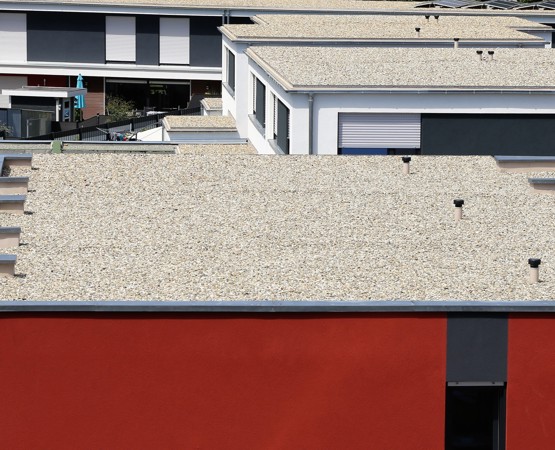
Ballasted with gravel
The membrane is loosely laid and anchored by the gravel’s weight, providing an aesthetically pleasing surface and natural fire protection. The gravel layer acts as a water reservoir during heavy rainfall, reducing the load on the drainage system and collecting debris to prevent clogged drains. This method offers a long-term economical roofing solution with superior lifespan and maintenance costs.
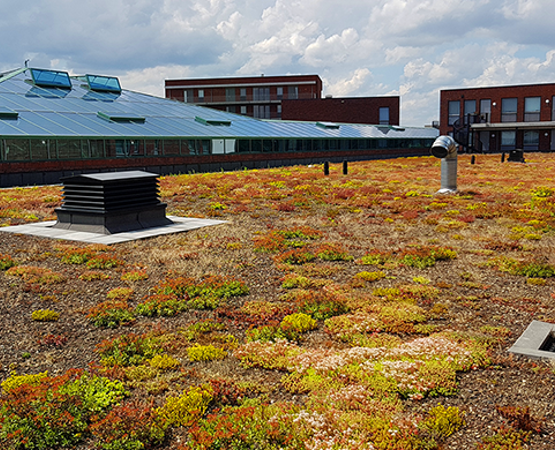
Green roofs
Enhance your EPDM roof with a green roof system. Green roofs can be designed with moss-sedum, herb-sedum, grass or roof gardens, while the vegetation build-up can also serve as ballast for the EPDM membrane. SealEco EPDM is well suited for green roof applications due to its durability, root resistance and resistance to moisture and microorganisms. Depending on the design and build-up of the roof, vegetation can also contribute to stormwater management by retaining and delaying rainwater runoff.

Terraces and deck constructions
The inverted roof, particularly advantageous for terraces, is a variation of a traditional ballasted roof. It is a quick and easy installation, and the ballast provides additional protection against UV radiation and physical damage. First place the EPDM as a waterproofing layer and then the water-resistant insulation is placed above, providing not only thermal insulation but also mechanical protection for the waterproofing, which is especially important during the construction phase. The traditional insulation can also be placed between the waterproofing and the decking for additional mechanical protection. The ballast can consist of gravel, concrete slabs, green roofs, or wooden decking.
This method fits these building types
Here you can find all the building types that this method can be used for. Whether you’re working on residential homes, commercial offices, industrial warehouses or educational institutions, this method is versatile and adaptable. It can also be applied to for example healthcare facilities or retail spaces. No matter the project, this method ensures efficiency and effectiveness across various building types.
SealEco, Your partner in waterproofing solutions.